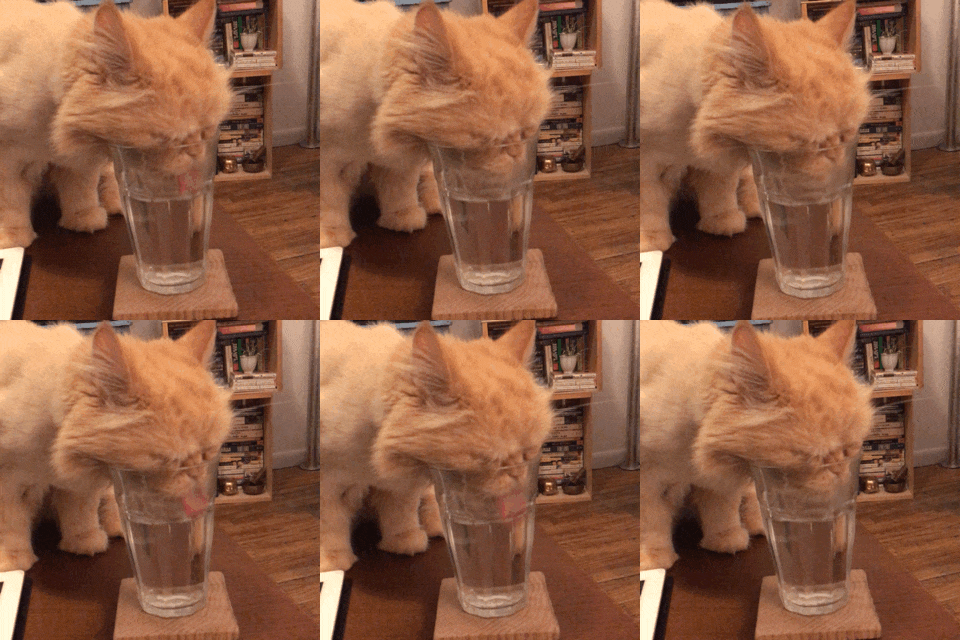
Cats do not tolerate high temperatures, as well as humans. Their small bodies only sweat very minimally through their paws and depend on rapid breathing to exchange warm air for cool.
Fur licking contributes to the evaporation of saliva and works as an additional cooling mechanism, but a very useful one, so an increase in environmental temperature requires taking more precautions. Some breeds with flat-face like Persian, are more susceptible to heat exhaustion because they can’t pant very well and have a harder time naturally cooling down their bodies.
Recognize the symptoms
- Sweaty paws (pads and metacarpal pads).
- Restless behavior.
- Rapid pulse and breathing.
- Panting.
- Mucous membranes (gums) and tongue turn bright red, but if they become grey or pale, your pet can collapse into a coma and die. You should go to the emergency vet room immediately.
- Thick saliva and drooling.
- Some vomiting may happen.
- Weakness, unsteady behavior, and diarrhea may occur.
- For those owners who know how to take rectal temperature (yes, I know…, this is not for everyone). Your cat bum temperature has to be lower than 103 F to be considered normal. Above that, you require vet evaluation, and higher than 105 F could be life-threatening.
What to do?
- Remove your cat to a cooler environment immediately.
- Wet the cat constantly with cool water and place him under a fan. Don’t use cold water, feline blood flow can be affected with abruptly temperature changes.
- Provide cool water to drink or try to stimulate him to drink. Sometimes the water on tuna cans works if you have one in your fridge.
- Bring your cat to the veterinarian to provide additional supportive care.
- You must always observe your cat for several days after a heat stroke episode to avoid complications that could lead to organ damage and failure.
Prevention is always the best idea
- Be sure your cat has access to cool shady areas and plenty of water, especially in Summer.
- Stimulate him to drink water by having different water bowls distributed around your house, adding one or two tablespoons of water to his wet food. Also, if your cat only eats dry food, change the diet to a wet-dry plan.
- Never leave a cat confined in a place without ventilation, like a car or other vehicles.
- Keep your cat inside the house on sweltering days checking the temperature not to be very elevated, otherwise, use air-condition or a fan.
So remember, keep your kitty hydrated!